
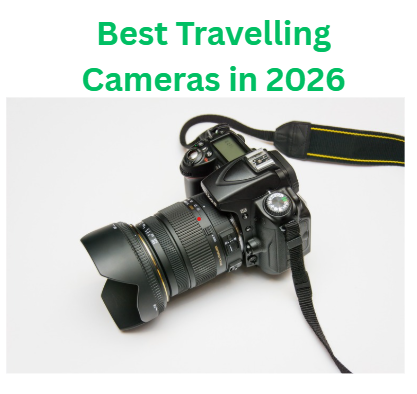
Best Travel Cameras in 2026: Four Main Types and Top Picks of Travel Cameras.
In 2026, the market for the best travel cameras is more exciting than ever. We’ve moved beyond the debate of “phone vs camera.”
The dust rising from a trail in Patagonia, the glow of a neon sign in Tokyo at midnight, the fleeting laugh of a friend across a dinner table these aren’t just memories; they are the currency of travel.
And while your smartphone has become a remarkably capable tool, there are times when only a dedicated camera will do.
It’s not just about having more megapixels; it’s about capturing the depth, the color, and the feeling of a place in a way that a phone’s algorithm simply can’t replicate.
Instead, we have a vibrant ecosystem of purpose built tools. From pocket-sized powerhouses to rugged adventure cams, choosing the perfect travel companion is about matching the tool to your unique style of exploration.
Whether you’re a weekend wanderer, a dedicated vlogger, or a seasoned pro seeking the ultimate lightweight kit, this guide will help you navigate the best options available right now in the United States.
Table of Contents
Why You Should Consider a Dedicated Travel Camera.
For years, many travelers have assumed their phone was “good enough“; for posting on social media, it often is.
But for creating images you’ll want to print large or cherish for a lifetime, a dedicated camera offers distinct advantages:
- Sensor Size Matters: The physical size of a camera’s sensor dictates how much light it can capture. A larger sensor means better low-light performance, richer colors, and the ability to create that beautiful blurred-background effect (bokeh) that makes portraits pop. Even a premium smartphone’s sensor is tiny compared to the APS-C or 1-inch sensors found in many best travel cameras.
- Optical Zoom: Your phone’s “zoom” is almost always a digital crop, which reduces image quality. A true optical zoom lens allows you to get closer to your subject whether it’s wildlife, a mountain peak, or a performer on a stage without any loss in sharpness.
- Creative Control: A dedicated camera puts you in the driver’s seat. With manual controls for shutter speed, aperture, and ISO, you can intentionally blur a waterfall, freeze a hummingbird’s wings, or capture the perfect balance of bright skies and dark foregrounds. It’s a tool for learning and creating, not just pointing and shooting.
- The Rule of Carrying: The best camera is the one you have with you. For a long time, that was your phone. Now, 2026’s best travel cameras are so compact and versatile that they can easily slip into a jacket pocket or small sling, removing the friction that used to come with carrying a heavy DSLR.
The Four Main Types of Best Travel Cameras in 2026.
Understanding the landscape of camera types is the first step to finding the perfect one for your journey.
1. Premium Compact / Point-and-Shoot – Best Travel Cameras.
These are the ultimate minimalist travel companions. They feature a fixed, high-quality zoom lens and a large sensor, all tucked into a body that can easily fit in a pocket.
- Best for: Travelers who want the best possible image quality in the smallest possible package. They are a favorite for street photographers, hikers, and anyone who prioritizes light packing.
- Trade-off: You cannot change the lens, so you’re committed to the built-in zoom range.
2. Mirrorless Cameras – Best Travel Cameras.
This is the choice for the photographer who travels. Mirrorless cameras offer the same large sensors (APS-C or full-frame) as professional DSLRs but in a much smaller, lighter, and more modern body. You can swap lenses to suit any situation: a fast prime for low-light dinners, a telephoto for a safari, or an ultra-wide for landscapes.
- Best for: Photography enthusiasts and pros who want full creative control and don’t mind carrying a few extra lenses.
- Trade-off: While the bodies are small, high-quality lenses add weight and bulk.
3. Action Cameras – Best Travel Cameras.
These rugged little cubes are designed to go where other cameras can’t. They are shockproof, waterproof, and incredibly durable, designed to capture immersive first-person footage of extreme sports, underwater adventures, and other high-energy activities.
- Best for: Adventure travelers, skiers, surfers, bikers, and anyone who wants to capture hands-free video.
- Trade-off: Image quality typically isn’t as high as a compact or mirrorless camera, especially in low light.
4. Vlogging Cameras – Best Travel Cameras.
This emerging category is built specifically for content creators. Vlogging cameras prioritize a flip-out screen so you can see yourself while recording, a microphone input for high-quality audio, and reliable autofocus that stays locked on your face.
- Best for: Travel vloggers, TikTokers and hikers (check 10 hiking essentials) and anyone who wants to create high-quality video content for an audience.
- Trade-off: Often, their still photo capabilities are not as advanced as similarly priced mirrorless cameras.
Top Picks: The Best Travel Cameras of 2026.
Based on expert reviews, traveler feedback, and real-world performance, these are the standout cameras for your 2026 adventures.
Best Overall & Best Compact: Fujifilm X100VI.
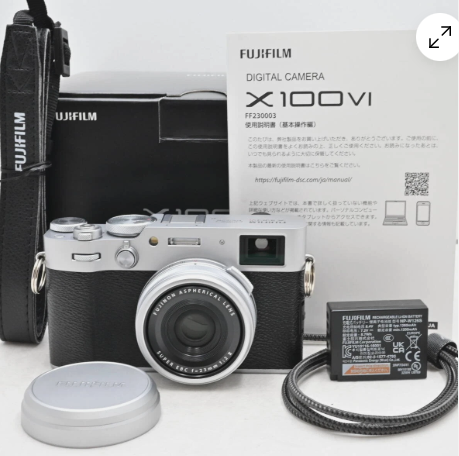
You can’t have a conversation about travel photography in 2026 without mentioning the Fujifilm X100VI. It is, for many, the holy grail of travel cameras.
It combines a gorgeous, retro design with a powerful 40.2MP APS-C sensor and a superb fixed 23mm f/2 lens (equivalent to 35mm).
Its secret weapon, however, is its 20 Film Simulation modes, which allow you to produce stunning JPEGs that look like classic analog film, right out of the camera, saving you hours of editing.
While its $1,599 price tag and legendary waitlists can be a barrier, its ability to force you to be a more creative shooter by “zooming with your feet” is part of its charm.
- Best for: The discerning traveler who wants the ultimate all-in-one creative tool.
Best Small & Pocketable: Ricoh GR III / GR IIIx.
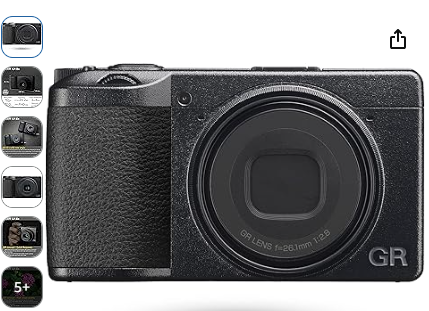
The Ricoh GR III is the definition of a stealthy street photography machine. It’s even smaller than the Fuji, easily disappearing into a jeans pocket. It features a sharp 24MP APS-C sensor and a 28mm f/2.8 lens (or a 40mm on the GR IIIx). If you value absolute portability and discretion above all else, this is the camera for you. It’s a serious tool for the serious minimalist.
- Best for: Street photographers, minimalists, and those who want a camera that truly disappears until the moment you need it.
Best All-Around Vlogging Camera: Sony ZV-1 II.
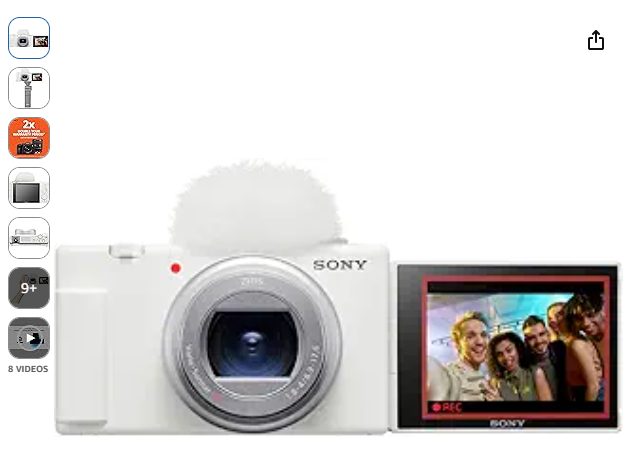
The Sony ZV-1 II has become the go-to pocket-sized vlogging camera. It’s designed with creators in mind, featuring a fast wide-angle zoom lens perfect for selfie-style shooting, a flip-out screen, and a “Product Showcase” mode that instantly shifts focus from your face to an object you hold up to the lens. The built-in directional microphone is also surprisingly good for a camera this small.
- Best for: Travel vloggers and content creators who prioritize simplicity, portability, and video-first features.
- Best Entry-Level Mirrorless: Nikon Z50II
For those ready to step into the world of interchangeable lenses, the Nikon Z50II is a fantastic place to start. It features a stabilized 20.9MP APS-C sensor and Nikon’s excellent autofocus system in a compact, weather-sealed body. It’s intuitive enough for a beginner but powerful enough to grow with you as your skills develop.
- Best for: Beginners and enthusiasts who want the flexibility of different lenses without the size or expense of full-frame cameras.
Best Professional Full-Frame Travel Cameras – Sony a7CR.
If you demand professional-level image quality in the smallest possible full-frame body, look no further than the Sony a7CR. This camera packs a staggering 61MP sensor into a body barely larger than many crop-sensor cameras. It’s a resolution beast, allowing you to capture incredible detail and crop heavily into your images without losing quality. It’s an investment in your craft.
- Best for: Professional photographers who won’t compromise on image quality and want a lightweight, powerful travel kit.
Best Action & Adventure Camera: DJI Osmo Action 5 Pro.
The DJI Osmo Action 5 Pro is the new king of rugged capture. It records stunning 4K at 120fps for ultra-smooth slow-motion and features dual touchscreens for easy framing. Its standout feature is its incredible battery life, capable of running for hours on a single charge.
- Best for: Adrenaline junkies, skiers, surfers, and anyone documenting their high-energy outdoor pursuits.
Best Premium Full-Frame (Honorable Mention): Leica Q3.
For those with a taste for the finer things, the Leica Q3 is the pinnacle of premium compact cameras. It’s a minimalist’s dream, combining a 60MP full-frame sensor with a spectacular Summilux 28mm f/1.7 lens. It’s a tool of absolute precision, built for photographers who want nothing to stand between them and the image.
- Best for: The seasoned photographer or collector who values craftsmanship, legacy, and unparalleled image quality.
Where to Buy Your Travel Camera in the United States.
Once you’ve decided on the perfect camera, you’ll need to know the best places to buy it. In the U.S., you have several excellent options, each with its own pros and cons.
For Reliability & Selection: B&H Photo Video & Adorama.
Based in New York City, B&H is arguably the most famous camera store in the world. Its website is a treasure trove of inventory, and it’s known for its fast shipping and knowledgeable customer service. Adorama is its friendly rival, offering similar selection and pricing. Both are considered the gold standard for buying new gear with a full U.S. manufacturer’s warranty.
For Convenience: Amazon.
Amazon is the most convenient option for many. It offers a huge selection, competitive pricing, and the ease of Prime shipping. However, it’s crucial to be a savvy shopper. Always check the seller to ensure the item is both sold by the Amazon official website and is “new,” not “refurbished” or from a third-party reseller. This is the best way to ensure you’re getting a legitimate product with a valid warranty.
For Personalized Service: Local Camera Stores.
Don’t overlook your local camera shop. These stores, such as Hunt’s Photo & Video in New England or Cameta Camera in New Jersey, offer the invaluable ability to hold a camera in your hands before you buy it and receive personalized advice from passionate experts. They are a fantastic resource, especially for first-time buyers.
Essential Care for Your Travel Camera.
Investing in a good camera is just the first step. Caring for it while you travel ensures it will serve you for years.
- Clean Regularly, Clean Gently: Use a soft, dry microfiber cloth for the camera body. For the lens, start by using a blower to puff away loose dust and dirt. This prevents you from scratching the lens as you wipe. Only then, gently wipe with a lens pen or a fresh microfiber cloth. Never use canned compressed air, as it can spray harmful chemicals onto your sensor.
- Use a Protective Filter: It is wise to keep a clear UV or protective filter permanently on the front of your lens. It’s much cheaper and easier to replace a scratched filter than an entire lens.
- Mind the Weather: Even weather-sealed cameras have their limits. If you’re caught in a downpour or a dusty sandstorm, put the camera away in a protective pouch or bag as soon as possible.
- Never Check Your Camera: Always keep your camera gear in your carry-on luggage. Checked baggage can be roughly handled, and the extreme temperature and pressure changes in the cargo hold are terrible for delicate electronics and lenses.
Conclusion.
Choosing the best camera for your travels is a personal journey. It’s about finding the tool that feels like a natural extension of your curiosity and creativity. In 2026, we are spoiled for choice. Whether your path leads you to the iconic Fujifilm X100VI, the pocket-sized Ricoh GR III, the vlogging-focused Sony ZV-1 II, or the adventure-ready DJI Osmo Action 5 Pro, the perfect companion is out there.
Don’t get lost in a spec sheet. Think about where you go, what you shoot, and how you like to travel. The best camera is the one you’ll want to pick up every single day of your journey. So, go ahead. Find your perfect match and start capturing the world not just as it looks, but as it feels.
Frequently Asked Questions (FAQs).
Is a travel camera really that much better than my smartphone?
For most travel scenarios, yes. A phone is a camera of convenience; a dedicated camera is a camera of intention. The gap closes in perfect, bright daylight. But in low light (a candlelit restaurant, a sunset, a dim museum), at a distance (wildlife, a performer), or when you want creative control (shallow depth of field, long exposures), a dedicated camera will provide superior results you will notice for a lifetime.
I’m a total beginner. Will a good camera be too complicated?
Not at all. Most modern cameras, like the Nikon Z50II, are designed with beginners in mind. They have intuitive automatic modes that allow you to simply point and shoot. But they also give you the option to gradually learn manual controls as you improve. Cameras like the Fujifilm X100VI are also renowned for being a joy to use, with dedicated dials for key settings that make the process of learning photography feel more tactile and rewarding.
Is it worth buying a used camera to save money?
Absolutely. Buying used is one of the smartest ways to get into high-quality photography on a budget. However, it’s vital to buy from reputable sources that inspect and grade their gear. Trusted options include the used departments of B&H Photo, Adorama, KEH Camera, and MPB. These retailers offer a warranty and a return policy, which you won’t get from a private seller on a classifieds site.
What about smartphones for travel? Are they completely out of the question?
No, not at all. A flagship smartphone is an incredibly powerful and versatile tool, especially for video and quick sharing on social media. For a casual traveler documenting a family vacation, it may be all you need. But the question of this guide is about the best camera for travelling, and for anyone who values image quality, creative control, and the experience of photography as part of their journey, a dedicated camera is the definitive answer.
Disclaimer: This article is for informational purposes only. Product availability, pricing, and specifications are subject to change. Always verify current information with official retailers before making a purchase. All trademarks remain the property of their respective owners.
