
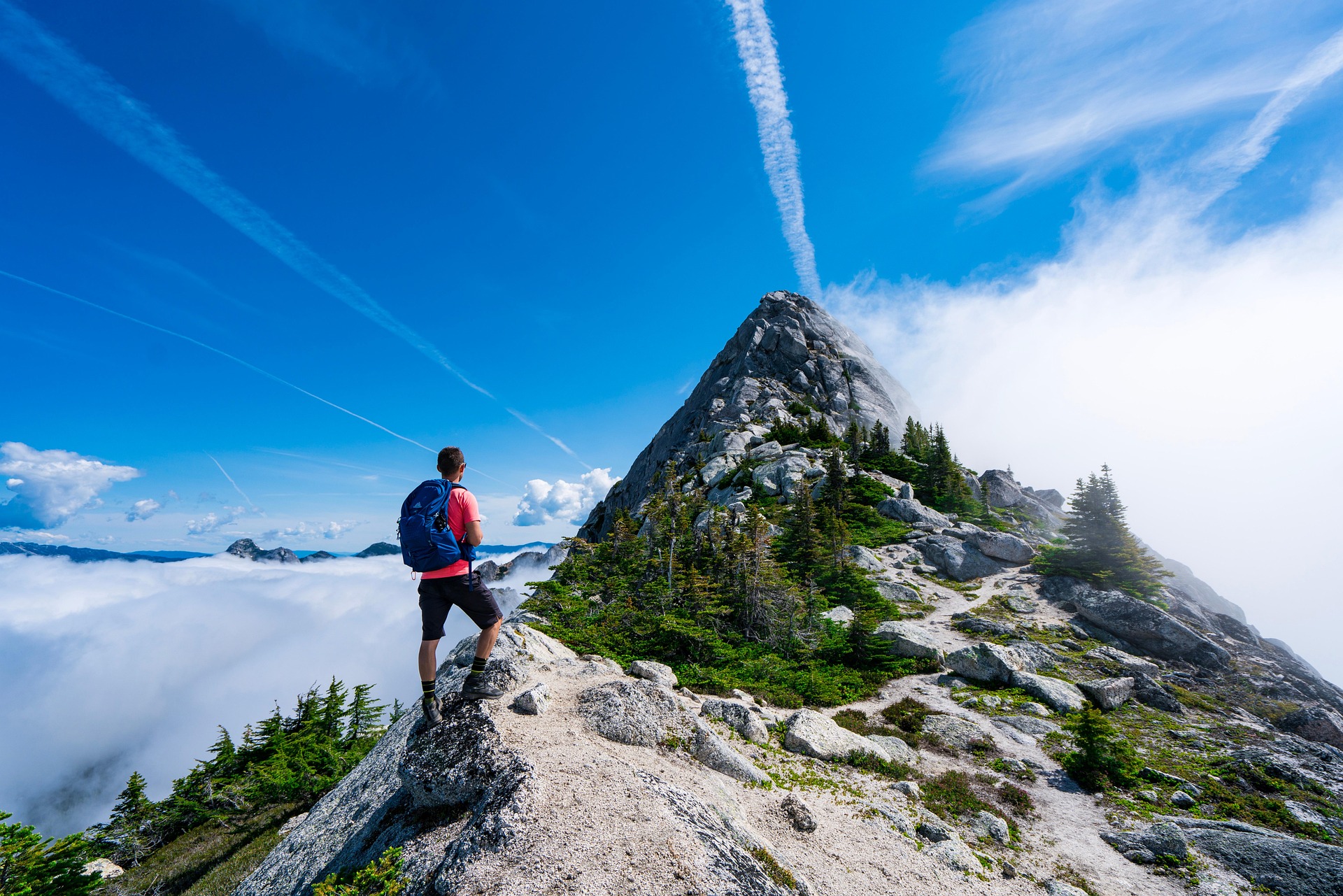
Introduction to hiking: benefits, best hiking places, essentials and hiking apps.
Stepping onto a trail brings a unique sense of calm; the hum of everyday life gives way to the quiet sounds of nature: gravel underfoot, wind rustling through pine trees, and the steady rhythm of your breathing.
This is hiking: simple, accessible, and deeply fulfilling. And in 2026, more people than ever are discovering its appeal. You don’t need elite fitness or expensive equipment to get started.
Whether you’re walking beneath Yosemite’s massive cliffs, trekking across Scotland’s rugged highlands, or making your way through Australia’s sunbaked red landscapes, hiking opens up the world in a direct and personal way. All it takes is a solid pair of shoes and a willingness to explore.
This comprehensive guide will walk you through the essentials: what hiking involves, the physical and mental benefits it provides, and top destinations across the United States, the UK, and Australia.
I will also cover the necessary gear, key safety practices, and answers to common questions everything you need to begin with confidence.
Table of Contents
What Is Hiking?
At its simplest level, hiking is the act of walking in nature for recreational purposes. But if you ask anyone who has ever stood on a summit at sunrise, they’ll tell you it’s so much more than that.
It’s a chance to push your physical limits, reset your mental state, and reconnect with something wilder than a city street.
There’s a subtle distinction often made between “hiking” and “backpacking.” Hiking generally refers to a day trip where you carry only what you need for a few hours on your back.
Backpacking is a multi-day journey where you carry all your camping and cooking gear with you, sleeping under the stars along the way.
One of the most beautiful things about hiking is that, with a little planning, almost anyone can do it. You can start with a gentle one-mile loop around a local lake and work your way up to tackling a 14,000-foot peak. The trail is yours to conquer.
The Benefits of Hiking (Beyond the Views).
Yes, the scenery is a major perk, but the benefits of regular hiking run deep.
It’s a Full-Body Workout.
Hiking isn’t just walking on a treadmill. It engages your core, glutes, and quads while challenging your balance on uneven terrain.
It’s a low-impact activity that builds muscle and bone density while burning serious calories.
It’s a Natural Mood Booster.
The mental health benefits are some of the most powerful. Studies show that spending time in green spaces reduces stress, anxiety, and depression. The combination of fresh air, natural light, and physical exertion releases endorphins that leave you feeling happier and more relaxed.
It Sharpens Your Brain.
The complexity of navigating a rocky trail actually changes your brain for the better, improving memory, cognition, and creative thinking.
It’s Good for Your Heart.
Hiking is a fantastic form of cardio. Regular hikes can lower your risk of heart disease, help manage blood pressure and cholesterol, and improve your overall cardiovascular health.
Best Hiking Places in the United States.
The U.S. is home to 63 national parks and countless millions of acres of national forest, offering an almost infinite variety of hiking experiences.
The Narrows (Zion National Park, Utah).
This is a bucket-list hike. Instead of a dusty path, you walk inside the Virgin River, surrounded by towering 1,000-foot canyon walls. It’s a surreal, cool, and incredibly fun adventure.
The Nantahala Yellow Mountain Trail (North Carolina).
Voted the best U.S. hiking destination for 2026 by Travel + Leisure, this trail in the Nantahala National Forest leads you to an old 1934 fire tower at the summit of Yellow Mountain, rewarding you with jaw-dropping 360-degree views of the Blue Ridge Mountains.
Half Dome (Yosemite National Park, California).
This is one of the crown jewels of American hiking. It’s a grueling 14- to 16-mile round trip with 4,800 feet of elevation gain, culminating in a nerve-wracking ascent up steel cables to the summit for a view that is truly unmatched.
Kalalau Trail (Kauai, Hawaii).
For a truly epic coastal trek, the Kalalau Trail is a challenging 22-mile round trip along the Nā Pali Coast, passing towering sea cliffs, pristine beaches, and lush jungles. It’s a true island adventure.
Best Hiking Places in the United Kingdom.
The UK is a walker’s paradise, with a rich history of public footpaths and dramatic, moody landscapes that feel like stepping into a postcard. 2026 is an especially exciting year, as the iconic Coast to Coast Walk finally becomes an official National Trail.
The Coast to Coast Walk (England).
This 192-mile trek from St. Bees in Cumbria to Robin Hood‘s Bay in North Yorkshire is the ultimate British adventure, traversing three stunning national parks: the Lake District, the Yorkshire Dales, and the North York Moors. After 50 years as an unofficial route, it’s being upgraded for its official 2026 launch, making it more accessible than ever.
The West Highland Way (Scotland).
Scotland’s most famous long-distance path runs for 96 miles from the outskirts of Glasgow to the foot of Ben Nevis, the UK’s highest mountain. It showcases the best of the Highlands, with vast lochs, heather-covered moors, and towering, rugged peaks.
Scafell Pike (Lake District, England).
For a classic, challenging day hike, summiting Scafell Pike is a rite of passage. As the highest mountain in England, the climb is steep and rewarding, offering stunning views of the surrounding fells and the Irish Sea. Hiking experts have even named it the best winter hike in the UK.
The Allerdale Ramble (Cumbria, England).
New for 2026, this 52-mile path offers a completely different perspective of the Lake District, taking you from the Solway Coast through rolling sand dunes and quiet valleys into the heart of Borrowdale.
Best Hiking Places in Australia.
Australia offers some of the most diverse and unique hiking terrain on Earth, from tropical rainforests to ancient desert gorges. Because of the extreme heat, remember to check conditions carefully and always carry ample water.
Larapinta Trail (Northern Territory).
Often cited as one of the best desert treks in the world, the Larapinta Trail stretches for 223 kilometers (139 miles) through the West MacDonnell Ranges. The landscape is ancient, dramatic, and utterly breathtaking, featuring stunning gorges like Ormiston Gorge and the towering peak of Mount Sonder.
The Overland Track (Tasmania).
For those who love lush, green wilderness, Tasmania’s Overland Track is an absolute stunner. The 65-kilometer (40-mile) walk takes you through the heart of the Cradle Mountain-Lake St. Clair National Park, past glacial lakes, ancient rainforests, and the jagged peaks of the Ducane Range.
Grampians National Park (Victoria).
For incredible day hikes with amazing scenery-to-effort ratios, the Grampians (Gariwerd) are hard to beat. Trails like Mount Rosea offer stunning 360-degree views from rocky peaks without the overwhelming crowds found at more famous lookouts like the Pinnacle.
Bibbulmun Track (Western Australia).
Stretching nearly 1,000 kilometers (620 miles) from Perth to Albany, the Bibbulman Track is one of the world’s great long-distance walks, taking you through towering karri forests, over coastal cliffs, and across Australia’s stunning southwest coastline.
Hiking 101: The Essentials You Need.
You don’t need an arsenal of gear, but there are a few non-negotiables for a safe and comfortable hike. Here’s the core checklist based on the “10 Essentials” philosophy:
- Navigation: Always carry a map and compass and have an offline GPS app (like AllTrails or Gaia GPS) downloaded on your phone.
- Sun Protection: Protect your skin with sunscreen, a wide-brimmed hat, and polarized sunglasses.
- First Aid Kit: Pack a small kit with bandages, antiseptic wipes, pain relievers, and any personal medications.
- Hydration: Bring at least two liters of water for a full-day hike. A hydration reservoir or water bottles are both fine.
- Trail Food: Pack high-energy snacks that are easy to eat on the go. Think granola bars, trail mix, nuts, and jerky.
- Clothing: The golden rule is no cotton! Cotton gets wet and stays wet, which can lead to chafing and hypothermia. Stick to moisture-wicking synthetic or merino wool layers. Be sure to pack a rain jacket.
- Footwear: A solid pair of hiking shoes or boots with good traction is your most important piece of gear. Choose between lightweight trail runners or supportive boots depending on your terrain and pack weight.
- Illumination: A headlamp is crucial, even on a day hike. Getting back to the trailhead after dark is always a possibility.
- Emergency Shelter: An emergency bivy or a space blanket is a lightweight, life-saving piece of gear in case you’re forced to spend an unexpected night outdoors.
- Multi-Tool/Knife: A small knife or multi-tool can be used for everything from gear repair to first aid and food prep.
Hiking Apps: Your Digital Co-Pilot.
Your smartphone is a powerful navigation tool, but only if you have the right apps and use them correctly. Here are the best for 2026:
• AllTrails: The No. 1 choice for day hikers. It has the largest database of trails, detailed stats, recent reviews, and offline maps. The “Wrong Turn Alert” feature in the Pro version is a lifesaver for staying on track.
• Gaia GPS: The go-to for serious backcountry explorers. It allows you to overlay multiple map types (topographic, satellite, land ownership) on one screen for deeper situational awareness.
• FarOut: The undisputed champion for long-distance thru-hiking, specifically designed for iconic routes like the Appalachian and Pacific Crest Trails. The real-time, crowdsourced waypoints for water, campsites, and trail conditions are invaluable.
Safety First: What to Do If You Get Lost.
Even on a well-marked trail, getting disoriented can happen. Following these simple steps dramatically increases your chances of a positive outcome:
- Stay Calm and STOP: Don’t panic. Use the STOP acronym: Sit down, Think, Observe, and Plan your next move.
- Re-check Your Map: Pull out your map and compass. Try to identify any landmarks around you to get your bearings.
- Retrace Your Steps: If you can identify your last known point, carefully backtrack a short distance to see if you can re-find the trail.
- Stay Put if Unsure: If you are genuinely lost or it’s getting dark, your best bet is to stay put. It is far easier for search and rescue teams to find a stationary person. Find shelter, get warm, and make yourself visible.
Your Trail Awaits.
Hiking is a gift that keeps on giving. It builds your body, clears your mind, and connects you to the world in a way that staring at a screen never will.
Whether you choose to tackle the iconic Coast to Coast in the UK, summit a 14er in Colorado, or explore the ancient gorges of the Larapinta Trail in Australia, the most important step is the first one out your door.
So, lace up your boots, pack your pack, and get ready for the adventure of a lifetime. The mountains are calling; also, dont forget to check the hiking boots.
Frequently Asked Questions (FAQs).
Is hiking safe alone?
It can be, but it requires extra caution. Always share your detailed trip plan (trail, start time, expected return) with a trusted person. Start with popular, well-marked trails and consider carrying a satellite messenger (like a Garmin inReach) for emergencies.
How do I find trails near me?
Use apps like AllTrails or The Outbound Collective to search for hikes by location, length, and difficulty. Guidebooks and local ranger stations are also excellent resources.
What should I do if I encounter wildlife?
Never approach or feed wild animals. Always keep a safe distance. In bear country, make noise on the trail, store food properly, and carry bear spray. Always check local park guidelines before your trip.
How much water should I bring?
A good rule of thumb is half a liter (about 17 ounces) per hour of hiking in moderate weather. In hot conditions, you will need at least 1 liter per hour.
Do I need a permit to hike in national parks?
For day hiking in most national parks, you do not need a permit. However, highly popular and sensitive trails like Half Dome in Yosemite or Angels Landing in Zion do require a permit. Always check the specific park’s website before you go.
What is the difference between hiking and trekking?
While often used interchangeably, “trekking” generally refers to a multi-day journey that may be physically demanding, while “hiking” is more commonly used for a day-long walk in nature.
Disclaimer: This article is for informational purposes only. Trail conditions, weather, and regulations can change. Always check official park websites before setting out and be prepared for the environment you are entering.
