
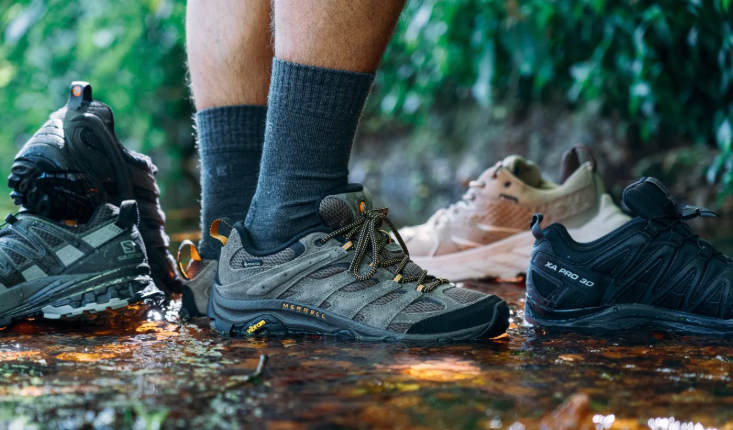
Best Waterproof Hiking Boots, Best Hiking Shoes for Women and Care Tips.
In this deep-dive guide, I will take you along as I uncover everything you need to know about the best waterproof hiking boots of 2026.
Stepping into a puddle that’s deeper than it looks and feeling nothing that’s the magic of a great pair of waterproof hiking boots.
Whether you’re tackling the muddy trails of the Pacific Northwest, crossing snowmelt streams in the Rockies, or just trying to keep your feet dry on a damp morning hike, a reliable waterproof boot is one of the most important pieces of gear you can own.
But with so many options Gore-Tex, eVent, KEEN.DRY, synthetic, leather how do you choose? And once you’ve invested, how do you make them last?
We’ll break down the top models for men and women, explain the different waterproofing technologies, offer fit advice for wide and narrow feet, share expert-approved buying tips, and give you a complete care routine to keep your boots performing for years.
Table of Contents
Why Waterproof Hiking Boots Matter.
The difference between a great hike and a miserable one often starts at your feet. Wet feet lead to blisters, cold feet, and a genuine risk of hypothermia in colder conditions. A good waterproof boot keeps moisture out while allowing sweat to escape, a balance that’s harder to achieve than it sounds.
Waterproof boots are essential for:
- Hiking in rain, snow, or wet conditions.
- Crossing streams and walking through mud.
- Early morning hikes with heavy dew on the grass.
- Multi-day backpacking trips where dry socks are a luxury
- Any terrain where you can’t predict the weather.
But here’s the truth: not all waterproof boots are created equal. The technology inside makes all the difference.
Waterproofing Technologies Explained: Gore-Tex, eVent, KEEN.DRY & More.
When you start shopping for waterproof hiking boots, you’ll encounter a dizzying array of acronyms and brand names. Here’s what they actually mean.
Gore-Tex: The Gold Standard.
Gore-Tex is the most widely recognized waterproof-breathable membrane, and for good reason. It uses a microporous structure that blocks liquid water while allowing water vapor (sweat) to escape.
Gore-Tex is known for exceptional durability and all-around reliability, which is why it appears in most premium hiking boots.
The trade-off? It’s more expensive, and in extremely humid conditions (above 90% humidity), breathability can decrease as the vapor gradient diminishes.
eVent: The Breathability Champion.
eVent is another excellent membrane that offers a key advantage: it allows moisture vapor to escape directly through its membrane without needing a separate liner.
This makes eVent roughly twice as breathable as standard Gore-Tex in some tests. However, eVent boots are less common in the U.S. market and can be slightly less durable than Gore-Tex.
KEEN.DRY & Other Proprietary Membranes.
Many brands have developed their own waterproofing systems. KEEN.DRY, for example, is KEEN’s proprietary waterproof-breathable membrane.
These are often less expensive than Gore-Tex and perform well for moderate conditions, though they may not match the long-term durability of the industry leader. Other examples include Merrell’s M-Select DRY, Columbia’s Omni-Tech, and Oboz’s B-DRY.
Which One Should You Choose?
| If you… | Choose… |
| Hike in varied conditions and want the most | Gore-Tex |
| reliable, time-tested performance | |
| Sweat heavily and hike in humid environments | eVent |
| Want solid waterproofing on a tighter budget | KEEN.DRY or another proprietary membrane |
Best Waterproof Hiking Boots of 2026.
After reviewing extensive testing from REI Co-op, GearJunkie, Outdoor Gear Lab, and other trusted sources, these are the standout waterproof hiking boots for 2026.
Best Overall: On Cloudrock Mid Waterproof.
The On Cloudrock Mid Waterproof earned a near-perfect score of 97/100 in REI’s 2026 testing. With proprietary CloudTec pods that compress horizontally and vertically, these boots feel like you’re “walking on a cloud”.
They feature a Cosmo waterproof membrane, Missiongrip rubber outsole for traction, and weigh just 1 lb 11 oz per pair. Testers noted they “rode like a sneaker” and required zero break-in time. Best for hikers who prioritize all-day comfort without sacrificing waterproof protection.
Best for Comfort (Max Cushioning): Hoka Kaha 3 GTX.
If you want plush, cloud-like cushioning that absorbs impact on rocky terrain, the Hoka Kaha 3 GTX is your boot.
Outdoor Gear Lab named it the best hiking boot for men in 2026, praising its “super plush sole that absorbs all the impacts of foot strikes on the trail”.
The latest version has a slimmed-down heel for improved agility while maintaining that signature Hoka cushioning. It uses Gore-Tex waterproofing and offers excellent ankle support for uneven terrain.
Best Lightweight & Agile: Salomon X Ultra 5 Mid GTX.
For hikers who want the agility of a trail runner with the protection of a mid-height boot, the Salomon X Ultra 5 Mid GTX is the top pick.
GearJunkie calls it the best “lightweight hiker” of 2026. It combines a low-profile design with aggressive traction and reliable Gore-Tex waterproofing. This boot is ideal for fast-and-light mountain missions and day hikes where you want to move quickly but still need ankle coverage.
Best Budget-Friendly: Merrell Moab 3 Mid Waterproof.
The Merrell Moab (Mother of All Boots) series has been a best-seller for over a decade and for good reason.
The Moab 3 Mid Waterproof delivers exceptional value, with a well-cushioned, supportive design that outperforms its price tag.
It features Merrell’s M-Select DRY waterproof membrane and a Vibram TC5+ outsole. GearJunkie notes it “gets the job done on a budget,” and podiatrists recommend it as a versatile, comfortable option for most hikers.
Best for Heavy Loads & Backpacking: Lowa Renegade Evo GTX Mid.
When you’re carrying a heavy pack, you need a boot that provides serious support without sacrificing comfort.
The Lowa Renegade Evo GTX Mid is a long-standing favorite among backpackers, featured consistently in top-10 lists for 2026.
It uses a full-grain leather upper, Gore-Tex lining, and a supportive midsole that handles multi-day loads with ease. The break-in period is minimal for a leather boot, and the outsole provides excellent traction on mixed terrain.
Best Waterproof Hiking Boots for Women.
Women’s-specific boots account for differences in foot shape, calf muscle attachment, and weight distribution. Here are the top picks for 2026.
- Best Overall for Women: La Sportiva Ultra Raptor 3 Mid GTX – Outdoor Gear Lab‘s top recommendation combines the agility of a trail runner with the support of a hiking boot. It offers impressive water resistance, lightweight construction, and all-day comfort. It runs small, so size up a half size.
- Best Lightweight & Waterproof: La Sportiva TX Hike Mid Leather GTX – This boot impressed testers with its breathable yet fully waterproof performance. Despite a traditional leather look, it required virtually no break-in period.
- Best for Ankle Support: Scarpa Rush TRK GTX – If ankle stability is your top priority, the Rush TRK GTX delivers outstanding lateral support on rocky, uneven trails. It takes a few hikes to break in, but the payoff is reliable, confidence-inspiring support.
- Best Versatile Performance: Salomon Quest 4 Gore-Tex – In submersion tests, the Quest 4 passed when many competitors failed, keeping feet completely dry. It offers superior ankle support and durable construction for multi-day trips.
Best Waterproof Hiking Boots for Wide Feet.
If you have wide feet, you know the struggle of squeezing into standard D-width boots. Fortunately, 2026 has brought more wide-width options than ever before. Here are the top picks.
Merrell Moab 3 Mid Waterproof Wide (2E) consistently sets the standard for wide-foot comfort with its generous toe box and exceptional out-of-the-box fit.
KEEN Targhee IV Mid Waterproof Wide (2E/4E) uses KEEN’s signature Original Fit technology, which gives toes room to spread while maintaining a secure heel lock.
Salomon X Ultra 4 GTX Wide (2E) is the performance choice for wide-footed hikers who want technical trail capability without sacrificing fit.
Altra Lone Peak 9 Waterproof Mid is naturally wide with a foot-shaped toe box and near-zero drop that appeals to those who prefer a more natural hiking experience.
For budget-conscious wide-foot hikers, the Columbia Newton Ridge Wide (2E) offers impressive value.
Waterproof Hiking Boots vs. Trail Runners: Which Is Right for You?
Many hikers now debate between waterproof mid-height boots and lightweight trail runners. Here’s how to decide:
Choose waterproof hiking boots if you hike in wet conditions, carry a heavy backpack, need ankle support on uneven terrain, or prefer durable gear that lasts for years.
Choose trail runners (or non-waterproof boots) if you prioritize lightweight speed, hike in dry conditions, have strong ankles, or want your shoes to dry quickly after getting wet (since waterproof boots take much longer to dry out).
Some hikers use waterproof boots for winter or shoulder seasons and non-waterproof or mesh trail runners for summer.
Expert Buying Guide: How to Choose the Right Boot.
Here’s what podiatrists and professional boot fitters say to look for.
Fit is everything. Try on boots at the end of the day when your feet are slightly swollen. Wear the same hiking socks you’ll use on the trail. Ensure a thumb’s width of space between your longest toe and the end of the boot. The heel should lock in place without slipping, and there should be no pressure points across the instep or toes.
Consider your trip length and pack weight. Day hiking doesn’t require the same stiffness as multi-day backpacking. If you’re carrying a heavy load, look for boots with a stiffer midsole and taller ankle cuff for added support.
Think about your climate. In constantly wet, cold environments (like the Pacific Northwest in winter), full-grain leather with Gore-Tex is your friend. In hot, humid environments, prioritize breathability eVent membranes or synthetic uppers may serve you better.
Don’t rely on online reviews alone. Fit is too personal. Visit a physical store like REI, your local outfitter, or a specialty running shop where you can try on multiple brands and walk around before committing.
How to Care for Your Waterproof Hiking Boots (Cleaning & Maintenance).
Your waterproof hiking boots are an investment. Proper care will extend their life significantly. Follow this routine to keep them performing.
1. After Every Hike.
Remove the insoles and laces. Knock off excess mud and debris, then use a soft brush (a nail brush or old toothbrush works great) with lukewarm water to gently scrub away remaining dirt, paying special attention to seams and the tongue. Rinse thoroughly.
2. Air Dry Properly (Never Use Direct Heat).
Never place your boots on a radiator, in front of a space heater, or in a dryer. High heat can crack leather, melt adhesives, and damage waterproof membranes. Instead, stuff them with crumpled newspaper (replace it every 6–12 hours) and let them dry at room temperature.
3. Clean the Inside Occasionally.
Use a damp cloth to wipe the interior. Over time, dirt inside the boot can clog the waterproof membrane from the inside, reducing breathability and potentially causing leaks.
4. Reproof When Water No Longer Beads.
The DWR (durable water repellent) coating on the outside of your boots wears off over time. When water stops beading up on the surface, it’s time to reproof. For leather boots, use a wax-based conditioner. For synthetic or nubuck boots, use a spray-on treatment. Always match the product to your boot’s upper material and follow the manufacturer’s instructions.
5. Store Properly.
Store your boots in a cool, dry place away from direct sunlight. For long-term storage, keep them loosely laced and stuffed with paper to help them hold their shape.
Conclusion
The best waterproof hiking boot is the one that fits your foot, matches your terrain, and keeps your feet dry mile after mile. In 2026, you have more excellent options than ever before from the ultra-cushioned Hoka Kaha 3 GTX and the agile On Cloudrock Mid Waterproof to the budget-friendly Merrell Moab 3 and the expedition-ready Lowa Renegade.
Remember: great boots are an investment in your comfort and safety. Take the time to try them on properly, break them in gradually, and care for them after every adventure. With the right pair, you’ll be ready for whatever the trail throws at you, rain, mud, streams, and all.
Frequently Asked Questions (FAQs).
What is the best waterproof hiking shoe?
The best waterproof hiking shoe depends on your specific trail needs. Based on top gear tests, the Salomon X Ultra 5 GTX is the best overall choice for most hikers due to its ideal balance of weight, stability, and versatility
Are waterproof hiking shoes really waterproof?
Waterproof hiking boots with a membrane, such as Gore-Tex, are considered the best type for hiking as they keep feet dry and provide good grip and ankle support. “Truly waterproof hiking boots have a membrane that is impenetrable, as long as you do not submerge your foot deeper than the depth of the boot.”
Does Nike make waterproof hiking shoes?
From waterproof ACG models to lightweight trail kicks, the Nike hiking shoes have gained the trust of many when it comes to great quality, reliability, and comfort.
Can I wear waterproof boots in the summer?
Yes, but be aware that they run hotter than non-waterproof shoes. In dry, hot conditions, sweat can accumulate inside, making your feet feel clammy. If you hike primarily in dry climates, consider a non-waterproof boot for summer and save the waterproof pair for shoulder seasons and wet conditions.
Are expensive waterproof boots worth it?
For frequent hikers and backpackers, yes. Premium materials like Gore-Tex, Vibram outsoles, and full-grain leather last significantly longer than budget alternatives. For occasional day hikers in fair weather, a mid-range boot like the Merrell Moab 3 provides excellent value.
Disclaimer: This article contains affiliate links. We may earn a small commission at no extra cost to you if you purchase through these links. This helps us continue testing and reviewing gear. Product availability and pricing are subject to change.
