
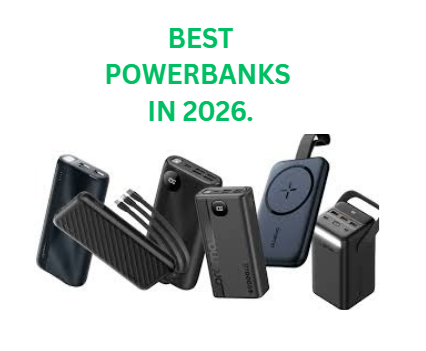
Deep Dive into the Best Powerbanks in 2026 and Care Tips.
Finding the best power banks in 2026 isn’t just about getting the biggest battery anymore; it’s about finding the perfect balance of capacity, charging speed, portability, and price.
No matter how much you love the great outdoors, there’s a sinking feeling that’s all too familiar: you glance at your phone, ready to capture that perfect sunset, only to see that dreaded 5% battery warning flash across the screen.
It’s 2026 and our smartphones, laptops and cameras have never been more powerful yet they still run out of juice faster than we’d like.
Enter the power bank. Once a simple “emergency battery pack” is now an essential piece of everyday carry gear, and the technology has come a long, long way.
Whether you’re a smartphone user looking for a pocket-friendly top-up, a road warrior who needs to keep a laptop running all day, or a camper preparing for a weekend off-grid, this guide will help you navigate the world of portable power.
We’ve tested the top models, broken down the key specs, and answered the most common questions to help you find the best power bank for your unique needs.
Table of Contents
Key Things You Should Know Before Buying.
Before we get into the nitty-gritty of the top picks, there are a few key specs and terms that you’ll need to understand to make the right choice.
mAh vs. Wattage: The Capacity Debate.
First, let’s talk about the numbers. mAh (milliamp-hour) is the spec that tells you how much energy the power bank can store. It’s the size of the gas tank. But beware of misleading numbers. A power bank’s advertised capacity is often not what your phone actually receives. There’s a rule of thumb: a 10,000 mAh power bank provides approximately 6,000-7,000 mAh of usable power to your device after conversion losses.
Wattage (W) is the other critical spec, which dictates how fast it can transfer that energy to your device. Think of it as the size of the fuel hose. If you want to fast-charge a modern smartphone or laptop, you’ll need a power bank with enough wattage. For 2026, look for:
- Phones (iPhone, Galaxy): A power bank with at least 20W to 30W output.
- Laptops (MacBook Pro): You’ll need a minimum of 65W to 100W, with some high-end models delivering up to 140W per port for ultra-fast refueling.
The sweet spot for most users is a 10,000 mAh power bank with 30W bi-directional charging it’s pocket-friendly and can fast-charge most phones.
USB-C is King (Say Goodbye to Old Ports).
The era of Micro-USB is over. In 2026, USB-C has become the undisputed universal standard. Not only should you use a USB-C cable to charge your phone, but the best power banks now also use a USB-C port to recharge themselves. A good 10,000 mAh pack can go from 0% to 100% in roughly two hours.
GaN Technology: Smaller, Cooler, Smarter.
If you’re wondering how power banks have gotten so small and powerful, it’s largely thanks to a technology called Gallium Nitride (GaN). It’s a semiconductor material that has allowed manufacturers to shrink the internal components, making chargers and power banks significantly smaller, more energy-efficient, and 30% cooler than older models.
TSA Rules for Flying in 2026.
If you’re planning to take your power bank on a plane, you absolutely must know the TSA rules. As of 2026, these are the non-negotiable rules for US travelers:
- Power banks MUST go in your carry-on luggage. You cannot put them in your checked bag.
- Under 100 watt-hours (Wh) is free to carry-on. For reference, a standard 27,000 mAh power bank generally falls right under this limit.
- Between 100-160 Wh requires airline approval. Only a maximum of two are allowed.
And always, always store the power bank in your personal item or carry-on, never in a bag that goes into the cargo hold.
Top Picks: The Best Power Banks in 2026.
After combing through expert reviews and hands-on testing data from trusted sources like CNET, ZDNet, and TechCrunch, these are the standout portable chargers you can buy right now in the United States.
Anker Prime 26,250mAh 300W – Best for Laptops & Power Users.
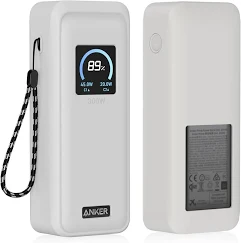
When you need enough power to run a professional-grade laptop or two this is the ultimate companion.
- Why it’s the best for laptops: The Anker Prime delivers a staggering 300W of total output across its two USB-C and one USB-A ports. It can charge a MacBook Pro M4 to 50% in just 27 minutes and the entire 26,250mAh power bank can recharge itself to 50% in a mere 13 minutes thanks to its 140W input. It features a smart digital display and full app control.
- Who it’s for: Digital nomads, creative professionals, and anyone who hates being tied to a wall outlet.
Anker Nano 10,000mAh 30W – Best All-Around For Phones & EDC.
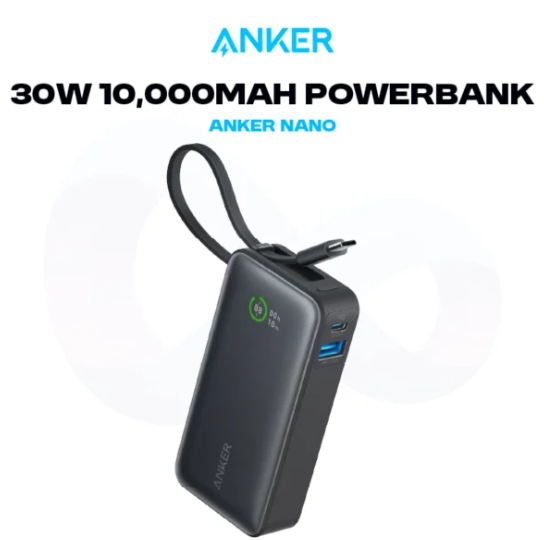
For 99% of travelers and commuters, this is the goldilocks power bank not too big, not too small, but just right.
- Why it’s a winner: It offers the perfect balance of portability and performance. With 10,000 mAh capacity and 30W output, it provides about two full charges for an iPhone and tops up Samsung devices at their full 25W speed. It’s been praised for its quality construction and for being just big enough to get the job done without weighing you down.
- Who it’s for: The best everyday carry (EDC) power bank for nearly everyone.
INIU SnapGo Air 10,000mAh – Best Magnetic / MagSafe Option.
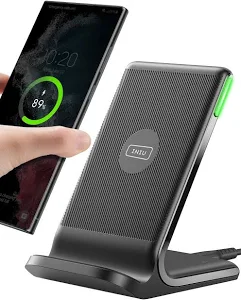
The world is going magnetic, and the INIU SnapGo Air is the new king of MagSafe-compatible power banks for 2026.
- Why it’s great: It’s an ultra-slim 10,000 mAh pack that snaps firmly onto the back of an iPhone 16. It supports 25-watt wireless Qi2.2 fast charging for newer iPhones and comes with two USB-C ports for wired versatility. It also has an integrated LED display for checking remaining battery life.
- Who it’s for: The best choice for iPhone 15 and 16 users who want a sleek, cable-free charging experience.
Baseus PicoGo AC22 20,000mAh – Best Value / Budget Pick.
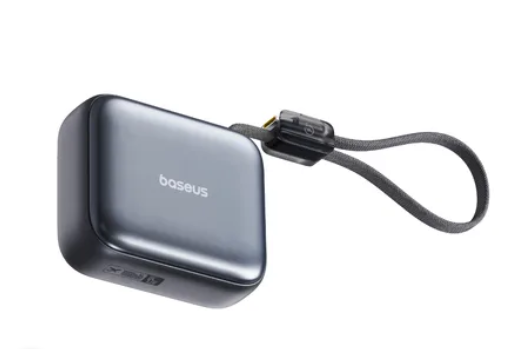
You don’t have to spend a fortune to get a quality high-capacity power bank. The Baseus PicoGo AC22 is proof of that.
- Why it’s a steal: It packs a 20,000 mAh capacity into a surprisingly compact body that can charge most flagship phones about 3-4 times. It provides up to 45W of output, which is enough to fast-charge a MacBook Air or iPad, all at a price point that’s often under $35-40.
- Who it’s for: Budget-conscious travelers and students who need maximum capacity without breaking the bank.
Nitecore NB10000 Gen4 – Best Ultralight for Backpacking.
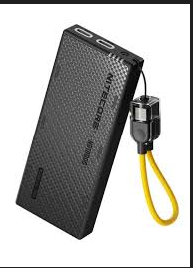
For the weight-obsessed hiker, every gram matters. The Nitecore NB10000 is legendary for a reason, and the 2026 Gen4 is better than ever.
- Why it’s unmatched: It’s an absolute featherweight, tipping the scales at just 143 grams (5 ounces) often less than a smartphone. Despite its low weight, it’s an IPX7-rated, rugged 10,000 mAh power bank that can withstand splashes and rain.
- Who it’s for: Backpackers, thru-hikers, and ultralight campers who need reliability without the weight penalty.
How to Choose the Right Power Bank for You.
The best power banks in 2026 depends entirely on your lifestyle. Here’s a quick cheat sheet:
The Casual User / Daily Commute.
- What to get: 5,000 mAh to 10,000 mAh, 20W-30W.
- Why: It’s small enough to fit in a pocket for an emergency charge to top off your phone.
The Weekend Traveler / Heavy User.
- What to get: 15,000 mAh to 20,000 mAh, 45W-65W.
- Why: This gives you enough juice for about 3-4 phone charges or one laptop refuel. It’s the best balance for weekend trips.
The Digital Nomad / Laptop User.
- What to get: 20,000 mAh to 27,000 mAh, 100W+.
- Why: This will keep a 14- or 16-inch laptop running for most of a day’s work, and the high wattage ensures it charges quickly.
The Adventurer / Off-Grid Camper.
- What to get: 20,000 mAh+, rugged design, solar charging optional.
- Why: This provides days of power for your phones and headlamps, and a rugged case can handle dust and drops.
How to Care for and Store Your Power Bank.
A quality power bank is an investment that can last for years if you take care of it properly.
Storage Tips for Long Life.
- Avoid extreme temperatures. Don’t leave your power bank in a hot car on a summer day or in a freezing car overnight. Heat is the biggest enemy of lithium batteries.
- Store at 50% charge. If you’re putting your power bank away for the off-season (like winter camping gear), store it with about half a charge. Storing it at 100% or 0% for months can degrade the battery cells faster.
Cleaning Your Power Bank.
- Use a dry microfiber cloth. For dust or dirt on the ports (like pocket lint, which is the #1 cause of charging issues), blow it out with compressed air or carefully dislodge it with a wooden toothpick.
- Never use water or cleaning solvents. Liquids can short-circuit the internal electronics.
Conclusion:
In 2026, you have a fantastic range of options to keep your devices powered up. If you are a heavy-duty laptop user, the Anker Prime 300W is in a league of its own.
For nearly everyone else, the Anker Nano 10,000mAh 30W is the goldilocks choice for its blend of portability and fast-charging speed.
And if you own a new iPhone, the magnetic INIU SnapGo Air is the most convenient way to top up wirelessly on the go.
No matter which you choose, understanding the difference between mAh capacity and wattage output is key.
And remember: always keep it in your carry-on, not your checked luggage. The gear is out there; now go find the right battery pack for your next adventure, read the most asked question about the best power banks in 2026.
Frequentlyly Asked Questions (FAQs).
Can I carry my power bank on a US flight?
Yes, you can and must. Power banks are strictly prohibited from checked bags and must be carried onto the plane with you in your carry-on baggage. Power banks under 100Wh (roughly 27,000 mAh) are generally allowed without issue.
Is it safe to leave a power bank plugged in overnight?
Yes, with a modern, reputable brand (like Anker, Baseus, or Nitecore). These devices feature built-in overcharge protection circuits that will cut off the power once the battery reaches 100%. However, it’s still a good habit to unplug it once it’s full.
Which is better for heavy use: 10,000 mAh or 20,000 mAh?
For heavy use and multi-day travel, a 20,000 mAh power bank is significantly better. A 10,000 mAh pack will charge a modern smartphone about 1.5 times, whereas a 20,000 mAh pack can handle a full three or four charges, enough for a long weekend off-grid.
Why is my 10,000 mAh power bank not fully charging my phone twice?
This is normal and due to conversion inefficiency. A 10,000 mAh battery might provide closer to 6,000-7,000 mAh of usable power to a phone because some energy is always lost as heat when voltage is converted. If a phone has a 4,500 mAh battery, one full charge uses most of the usable capacity.
Are cheap Amazon power banks safe?
They can be. Stick to well-known brands with good reputations for safety, such as Anker, Baseus, INIU, Belkin, and Samsung. The safest choice is a GaN (Gallium Nitride) model from a reputable company. Avoid non-branded, “too good to be true” deals that often use poor-quality battery cells with no safety protections, which can overheat or even catch fire.
Disclaimer: This article is for informational purposes only. Product specifications and prices are subject to change. You should always check current TSA regulations before traveling.
